Configuration
Technical Insights
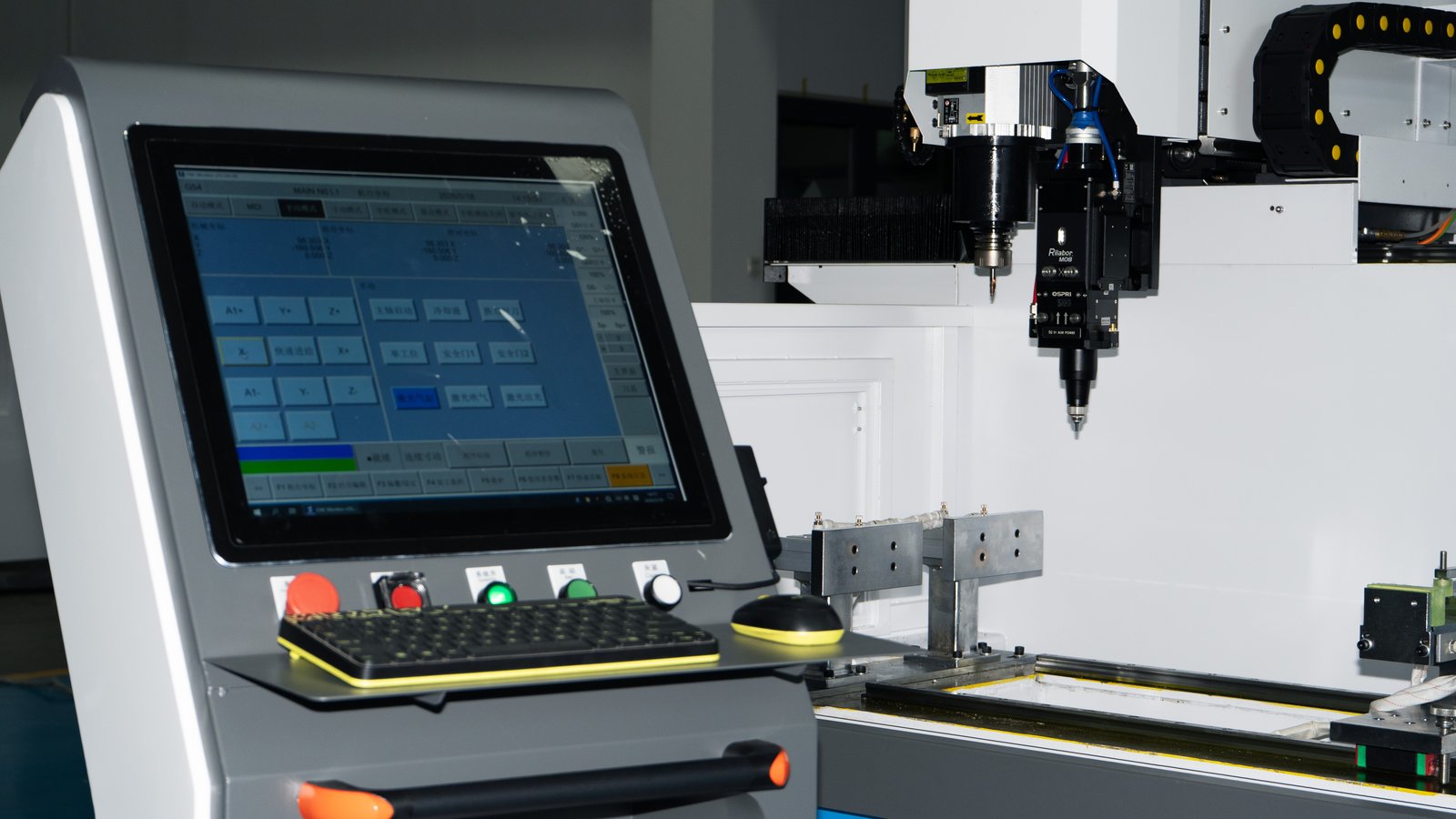
Whether to add a laser is the question most easily distorted by sales talk when buying profile equipment. Fiber cutting does improve throughput, but only if the part structure actually needs it. The judgement comes down to the composition of your machining content.
Cases where it is worth adding
- Parts with many shaped holes, long slots or contour cuts where milling paths are long
- Workflows that remove most of the allowance first and then finish — classic roughing-finishing separation
- Parts where cutting and drilling/tapping share the same positional accuracy requirement and should be done in one setup
- Many product variants with medium batches and frequent changeovers on the cutting step
In these cases the laser removes most of the allowance quickly as roughing, then the machine switches to precision milling. Total cycle time drops noticeably and positioning errors from a second setup are avoided.
Cases where it is not recommended
If your operations are only milling, drilling, chamfering and tapping with no contour cutting, a laser head brings no throughput gain at all — only higher purchase cost and more maintenance. A standard configuration without the laser is the better decision.
Steel versus aluminium
Differences in laser absorption make the gain from fiber cutting most pronounced on aluminium alloy parts. Steel profiles can also be cut, but power configuration and cutting thickness range must match the actual material thickness — which is why fiber cutting is usually an option rather than standard equipment on heavy-duty machines.
Deciding whether the fibre-cutting option pays off
| Nature of the work | Worth adding? | Reason |
|---|---|---|
| Many shaped holes, long slots or contour cutting | Yes | Tool paths are long; laser roughing cuts the total cycle time markedly |
| Removing bulk stock before precision finishing (roughing and finishing split) | Yes | Laser roughing plus milling finishing, and no second-setup locating error |
| Earthing symbols, QR coding, local oxide removal | Yes | Removes an entire transfer step; the WGT-3000G can integrate a 3 kW fibre unit |
| Only milling, drilling, chamfering and tapping | No | With no cutting requirement it only adds purchase cost and maintenance |
| Contour cutting of thick steel profiles | Verify first | Check the laser power rating against the actual material thickness |
Frequently asked questions
- Is the gain from laser cutting larger on aluminium than on steel?
- Usually yes. The way light alloys absorb fibre laser energy, combined with their thermal conductivity, gives a clear efficiency advantage on thin profiles and shaped holes. Laser also replaces part of the long milling paths, reducing tool wear, and heavy chip evacuation is always a burden when milling aluminium. Steel profile can be cut too, but you must first match the power rating to the actual material thickness - which is why fibre cutting is normally an option rather than standard equipment on heavy-duty models.
- Is more laser power always better?
- No. Power must match the thickness you cut and the cycle-time target. Excess power raises purchase cost, energy consumption and optical-path maintenance without being used on profile work. The right approach is to list your common material thicknesses and target cycle times, and let the machine builder recommend the power class accordingly. The 3 kW fibre unit integrated into the WGT-3000G is configured for the thickness range normally seen in profile machining.
- Does adding a laser head affect the accuracy of conventional drilling and milling?
- Not on a sensibly designed machine. Three points matter: whether the laser head is mounted independently of the milling spindle, whether it takes any of the cutting load, and whether fume shielding and extraction are properly isolated. When evaluating a machine, check that the head retracts and is protected in its park position, and that cutting fumes cannot reach the milling zone.
- What should we send the machine builder before deciding?
- Drawings or operation lists for two or three typical parts are enough. Ask them to estimate cycle time before and after, plus the cost difference, based on your real operations - deciding on numbers is far more reliable than deciding on concepts. If the same line also has to handle marking or oxide removal, list those too; such non-cutting requirements are often what finally tips the decision.
Before deciding, provide drawings of a few typical parts and ask the supplier to estimate cycle time with and without the laser. Judging by numbers is far more reliable than judging by concepts.