Selection
Technical Insights
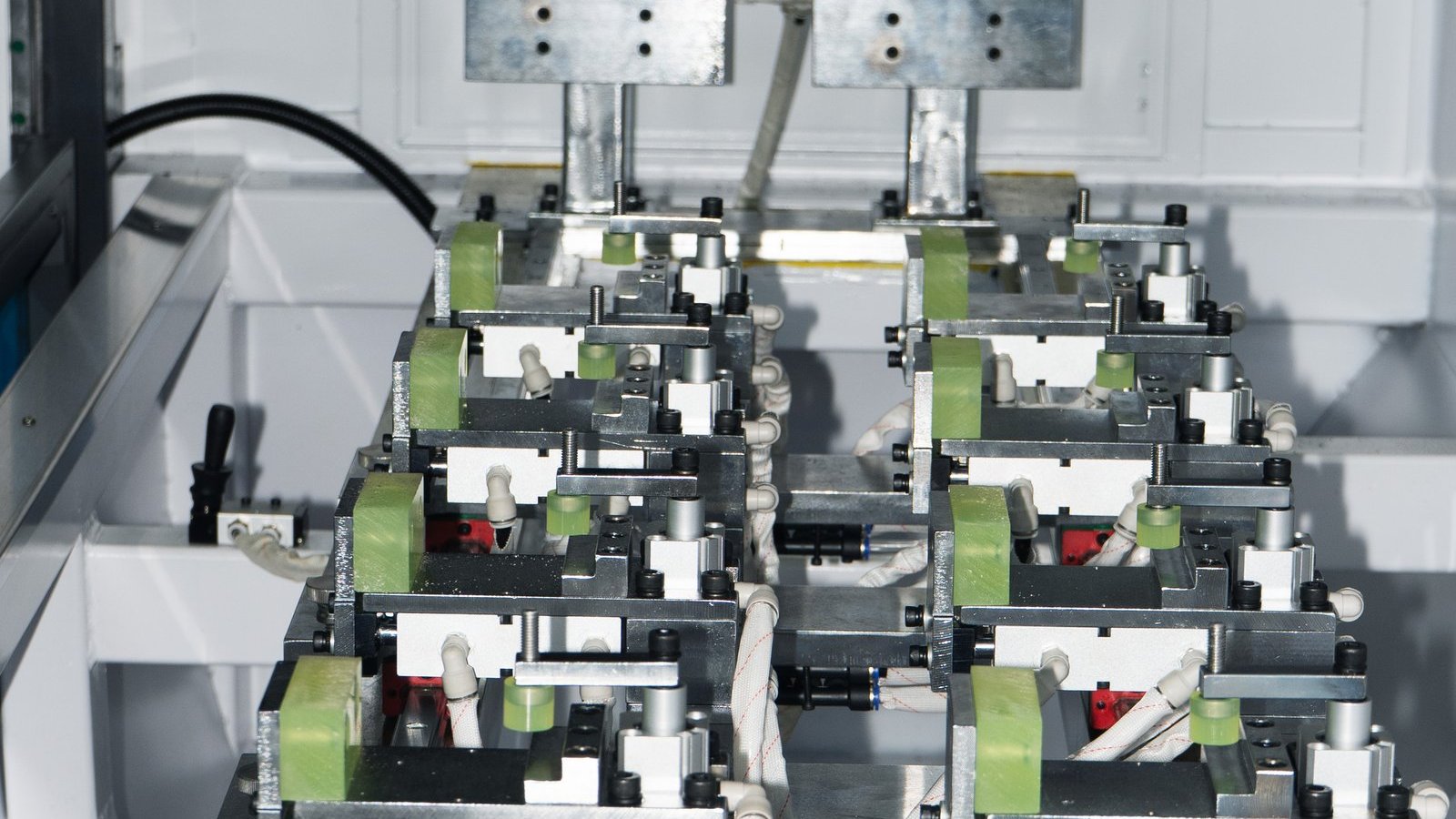
The most common wrong question when buying a machine is: "How many holes per hour does it do?" That question has no answer, because cycle time depends not on the machine but on the combination of workpiece and machine. On the same machine, shallow holes in thin aluminium run five times faster than deep holes in thick steel. This guide gives you a formula you can run yourself — with your own hole list, five minutes to a per-piece takt.
1. The full anatomy of cycle time
Per-piece takt = positioning travel + Σ cutting time per hole + tool changes × change time + load/unload time. Simple in form; the weighting among the four terms decides what to optimise:
- Holes spread over a 6-metre part → travel dominates; look at rapid traverse (G00)
- Holes clustered at the end with many diameters → tool changes dominate; look at the magazine and change time
- Few holes, heavy part → load/unload dominates; look at lifting and support design
- Many deep holes → cutting dominates; look at torque and chip evacuation
2. A worked example you can copy
Setup: 6-metre aluminium profile, 40 holes (30 × Ø8 through + 10 × Ø12 counterbored), pitch 150 mm. Estimated on typical WGTA-4500 parameters:
- Cutting: Ø8 in aluminium ≈ 2–3 s/hole, Ø12 counterbore ≈ 5–6 s/hole → about 140–170 s
- Positioning: 40 holes × 150 mm at 30–48 m/min rapid → about 15–25 s
- Tool changes: 2 diameters ≈ 2 changes × 2 s → about 4 s
- Load/unload (two-person handling or crane): 20–60 s
Total ≈ 180–260 s per piece — handling plus tool changes can exceed cutting time, which is why comparing spindle rpm alone never predicts takt.
3. The four levers of cycle-time reduction
- Lever 1 — merge operations: counterbores and through holes in one setup, end-face milling folded in; what you save is an entire operation, not seconds
- Lever 2 — compress tool changes: group by diameter, use disc or arm-type magazines to push per-change time to the 2-second class
- Lever 3 — optimise travel: order holes nearest-neighbour (CAM or macro does it automatically); halving air moves is common
- Lever 4 — improve logistics: feed tables, rollers, two-station loading design; take the 60-second load/unload down to 15
Four workpiece scenarios: where the takt time actually goes
| Scenario | Dominant term | Optimise first | Machine capability |
|---|---|---|---|
| 6 m profile, 40 holes even pitch | Cutting + travel | Nearest-neighbour hole ordering | WGTA-4500 · 4500 mm stroke, extendable |
| Clustered holes, many diameters | Tool changes | Short-path magazine | WGTA-4500 disc-type 16 tools · 2 s |
| Heavy long beam, deep holes | Cutting torque | BT40 + high-torque spindle | WGTB-6500 · 52.5 N·m |
| Complex section, multi-face features | Number of setups | One setup, multiple faces | WGT-3000G tilting table ±90° |
Frequently asked questions
- Can I use the "maximum efficiency" figures in the brochure?
- No. Brochure efficiency is measured on a specific test piece and correlates poorly with your hole diameters, depths, material and pitch distribution. The correct use: have the manufacturer run a measured or simulated estimate on your own hole list, with the four cycle-time components reported separately.
- How do I verify a quoted takt time?
- Three moves: (1) ask for a per-hole time table against your drawing; (2) at acceptance, cut your own workpiece and time it against the quote; (3) write "the four takt components reported separately" into the technical agreement, so responsibility is unambiguous.
- Does 1.8 s vs 3 s tool change really matter?
- It depends on change count. At 2,000 changes a day, a 1.2-second gap is 40 minutes of pure loss per day; at 100 changes a day it is imperceptible. Count your own changes first, then decide what to pay for change speed.
- Once I have the takt, how does it feed the purchase decision?
- Three steps: takt × daily output = number of machines; takt × labour occupancy = labour cost; current multi-process total hours vs single machining-centre hours = substitution ratio. Put those three numbers into the payback model — far more persuasive than any efficiency percentage.
Send one typical workpiece's hole list (diameters, depths, pitch distribution, material) and we will produce a cycle-time table broken into the four components on actual machine parameters — a document you can hold against any vendor's quotation.