Selection
Technical Insights
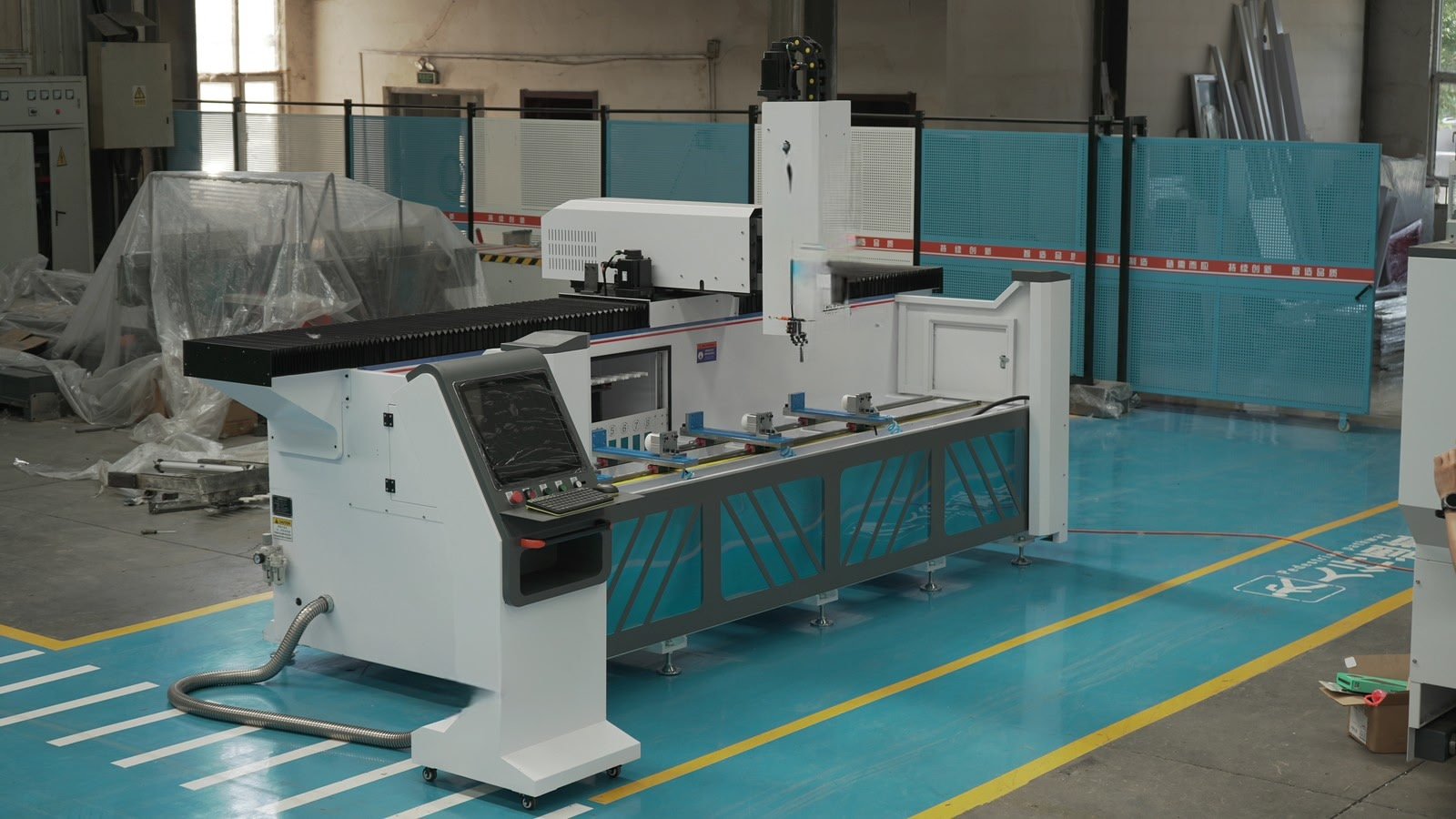
When output falls short, the usual reaction is to add another machine and another operator. But whether replacing single-purpose machines with a profile machining centre pays off cannot be judged from a supplier's efficiency multiplier — those numbers come from someone else's workpiece and someone else's shift. The reliable way is to run four calculations on your own shop-floor data.
Calculation 1: output — look at auxiliary time, not cutting time Of the time a profile spends from loading to unloading, cutting is often only part of it. The rest is loading, locating, turning, tool changing and waiting between operations. With single-purpose machines, every new operation means locating the part again: auxiliary time is repeated several times over, and work-in-progress piles up between stations.
- Measure total lead time for one profile today, then split it into cutting time and auxiliary time
- Count how many set-ups the part needs — each one repeats the auxiliary cost
- Drilling, milling, chamfering and tapping in one set-up saves transfer time more than cutting time
- The higher the share of loading time, the greater the gain from automation
Calculation 2: labour — how many machines per operator
Single-purpose machines usually need one operator each and depend heavily on operator skill. A CNC machine does not need constant attention, and loading can run in parallel with machining, so one operator can often tend several machines. Add the counterweight honestly: programming and set-up. If nobody in the plant can program, factor in the learning curve of graphical programming or template-based programs.
- Record how many people and shifts each operation occupies today
- Estimate the man-to-machine ratio as loading time divided by cycle time per part
- List programming and set-up effort as a separate line — it is often forgotten
Calculation 3: consistency and rework
This is the most overlooked line and frequently the largest gain. Manual marking and template locating produce hole-position error that assembly has to correct again and again; burrs at hole edges need manual deburring; parts with damaged threads are scrap. These costs never appear on a machine quotation, yet they occur every day.
- Measure current rework and scrap rates and convert them into money
- Measure the hours spent at assembly correcting hole-position error
- Estimate manual deburring hours — usually the easiest saving in a CNC setup
Calculation 4: changeover and small batches of many profiles
If your orders are many profiles in small batches, changeover efficiency may matter more than cycle time. Single-purpose machines often need a dedicated drill jig or template per batch; a CNC machine switches by program, and changeover is mostly recalling the program and adjusting fixtures. The smaller the batches and the more profiles, the heavier this line weighs.
- Count the number of batches per year and the average quantity per batch
- Add the cost of making and storing dedicated jigs
- If profiles change often, prioritise fixtures that adjust quickly
The four accounts: single-operation machines versus a profile drilling-milling centre
| Dimension | Single-operation machines | Profile drilling-milling centre | The question to ask when you cost it |
|---|---|---|---|
| Non-cutting time | Every operation means re-locating, turning and waiting for transport | Multiple holes and operations in one setup | How many operations exist today, and how many times are they repeated? |
| Labour | Typically one operator per machine, dependent on skill | No continuous supervision needed; loading runs parallel to cutting | How many machines does one operator actually run per shift, and how do you amortise programming and setup? |
| Consistency and rework | Depends on layout marking and jigs; errors surface at assembly | Hole positions come from the program, not from operator skill | What is your current rework and scrap rate, and what is it worth in money? |
| Changeover and variants | Custom drill jigs, one fixture per batch | Switched by program; changeover is program loading plus fixture adjustment | How many batches a year, and how many parts in an average batch? |
Frequently asked questions
- So how many single-operation machines can one profile machining centre actually replace?
- There is no universal multiplier; it depends on your own operation structure. Think of it this way: what you save are the clamping, transport and waiting steps that a single-operation route repeats. The more operations and the higher the share of non-cutting time, the larger the saving. If all you do is one drilling operation, the replacement effect is close to zero. Use the checklist in this article and run the numbers with your own shop-floor data.
- Does it still pay off with small batches and many variants?
- That is often where the benefit is greatest. With single-operation machines every new batch needs its own drill jig or template, so tooling cost and setting time grow with the number of variants. A CNC route changes over by program, so changeover time comes down to loading the program and adjusting fixtures. The smaller the batch and the more variants there are, the heavier this account weighs. Do note that small batches demand faster programming turnaround, so confirm whether the supplier offers program-writing support and initial training.
- Will not having a dedicated programmer become a bottleneck?
- At the start, yes. There are three usual ways through it: choose a control with conversational programming and process templates; have the supplier provide initial training and write the programs for your common sections; and build a template library of recurring sections that shop-floor staff can call up and edit. Most plants can write programs for routine parts in-house after two or three months.
- What is the minimum data needed to run this costing?
- Six items: profile material, section dimensions and length distribution; the operation list and hole count per profile; the current machine list with manning per operation and shift pattern; current annual output, rework rate and scrap rate; order batch structure (number of batches and parts per batch); and the available floor area plus power supply. The more complete the data, the closer the result will be to what actually happens after commissioning.
Data to prepare before calculating
- Profile material, section size and length distribution
- Operation list and number of holes per profile
- Current machines, headcount per operation, shift pattern
- Annual output, rework rate and scrap rate
- Batch structure: number of batches and quantity per batch
- Available power, compressed air and installation space
Send this list to the supplier and you will usually get cycle-time estimates, a fixturing proposal and a payback calculation before any quotation — rather than a sheet with only a price. And once you have run these four calculations yourself, you can tell immediately whether a proposal was really built around your shop.