Process
Technical Insights
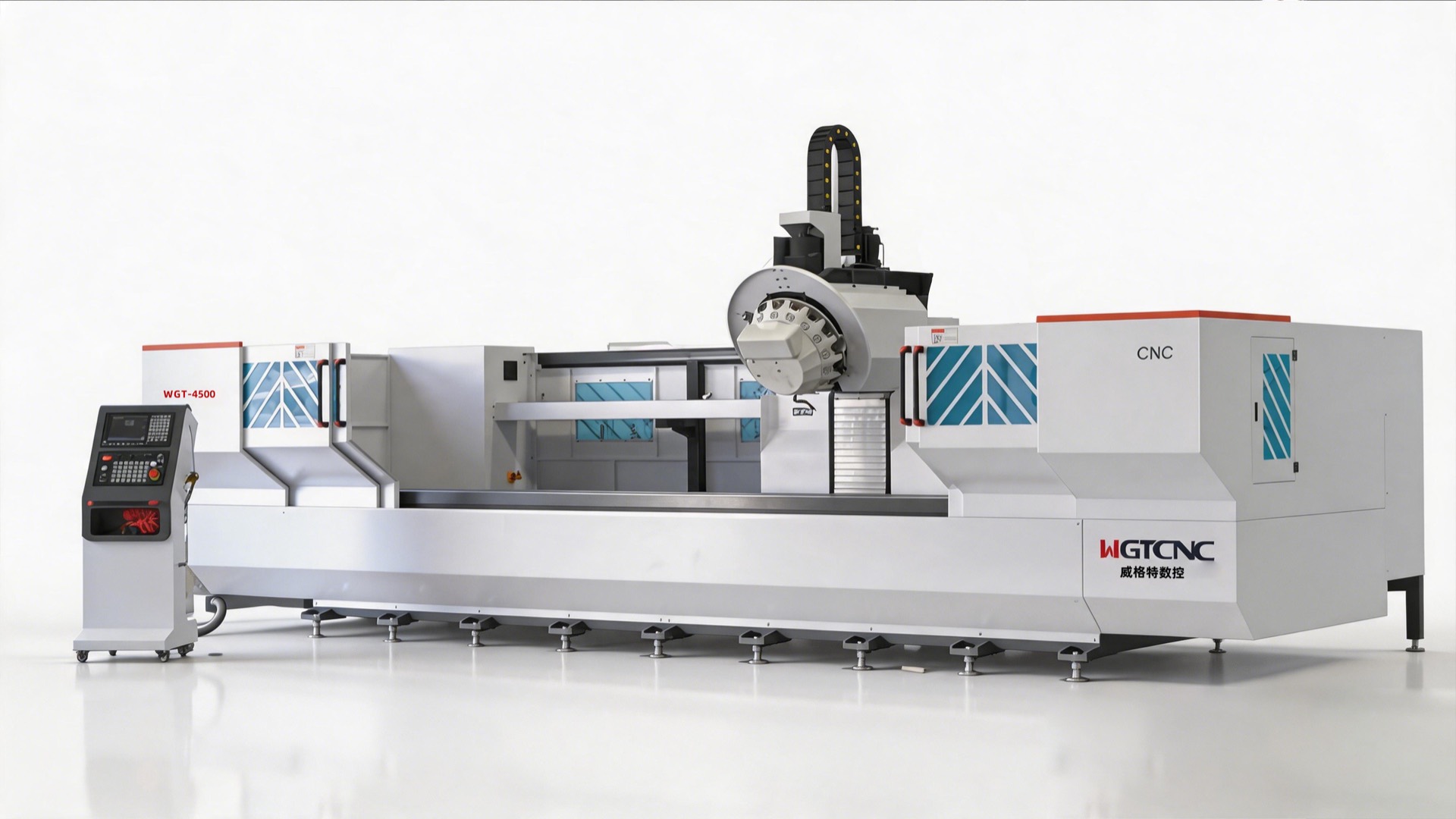
A heat sink profile is a hostile part for any machine tool: thin fins, hundreds to thousands of holes along the length, tapped holes in the same setup, and walls that deflect the moment you clamp them too hard. The tolerance on a single hole is rarely the problem. The problem is holding that tolerance at hole number 1,800, with a burr-free exit and a thread that does not strip during assembly.
1. Two workpiece types, two different machine requirements
Almost every heat sink enquiry falls into one of two families, and they pull the machine in different directions. Extruded heat sink profiles are long and narrow: 1 to 3 metres of aluminium with a fin pattern on one face and a hole pattern running down the length. Plate-type heat sinks — the ones with a machined base and pressed or brazed fins — are wide, and the hole pattern spreads across two dimensions. A machine sized for one is frequently the wrong machine for the other, so settle this before discussing models.
Workpiece type versus machine requirement
| Workpiece | Typical size | What decides the machine |
|---|---|---|
| Extruded profile heat sink | 1–3 m long, 100–300 mm wide | X-axis stroke, number of fixtures, ATC speed |
| Plate-type heat sink | Up to 1.6 m wide, 2–3 m long | Table width, Y-axis travel, chip evacuation |
| Small machined heat sink block | Under 500 mm | Spindle speed, tool magazine capacity |
2. Hole density, not spindle speed, sets cycle time
On a heat sink, the time per hole is made up of four pieces: rapid traverse to the next position, the drill entering, the retract, and the amortised tool change. When holes sit 15 to 30 mm apart, the rapid moves dominate, so acceleration and positioning speed matter more than the top spindle rpm. A machine that reaches 24,000 rpm but needs 1.5 seconds to move 25 mm will lose to a slower spindle with faster positioning and a quicker tool change.
A worked example: a 3-metre profile with 1,200 holes, 1.2 seconds per hole including positioning, gives 24 minutes of pure machining. If positioning and tool change together account for half of that, cutting the tool change from 6 seconds to 2 seconds on a 12-tool cycle already saves close to 50 seconds per part — across a shift, that is several parts.
- Measure the real hole count and pitch before asking for a cycle time; suppliers quote on hole count, machines run on pitch
- Reduce tool changes: combine drill and chamfer in one tool, or group holes by tool rather than by position
- Complete both faces in one setup if the table can tilt; every re-datum costs accuracy and time
- Ask for the control's look-ahead and block-processing speed — on dense patterns it shows up as real seconds
3. Thin walls and burrs: where yield is actually decided
Two failure modes cost heat sink producers more than any accuracy specification. The first is clamping distortion: a finned profile squeezed in a vice springs back after unclamping, and the hole pattern moves with it. The second is exit burr and torn thread, which surfaces at assembly as a rejected unit or an extra deburring station.
- Clamp on the solid web, never across the fins, and distribute pressure over several pneumatic fixtures instead of two hard points
- Support the profile along its length — an unsupported 3-metre extrusion will vibrate regardless of how well it is clamped at the ends
- Use sharp, polished-flute drills for aluminium and consider a support plate on the exit side when burr limits are tight
- For tapped holes in aluminium, forming taps usually beat cutting taps on both thread strength and chip problems
- Spray or minimum-quantity lubrication keeps chips clear without flooding a finned surface that traps coolant
4. Which configuration fits which job
With the workpiece type settled, the model choice is mostly about stroke, table width and tool change speed. The three configs below cover the majority of heat sink work we are asked to quote.
Configuration guide for heat sink work
| Job | Suggested model | Why |
|---|---|---|
| 1–3 m extruded heat sink, dense small holes | WGT-3000G | 3,000 mm X travel, 24,000 rpm spindle, 9 kW, optional 3 kW fibre laser for slots |
| Multi-spec batches, frequent changeover, tapping | WGTA-4500 | 4,500 mm travel, 16-station carousel with 2 s tool change, ±0.01 mm repeatability |
| Wide plate-type heat sinks, 2D hole arrays | WGTC-3016 | 3,000 × 1,600 mm table, 1,600 mm Y travel, gantry-style stability |
5. Five numbers to send with the enquiry
A heat sink quotation is only as good as the data behind it. Send these five and the supplier can return a cycle estimate and a fixturing concept instead of a price list: profile length distribution and annual quantity per length; hole count, diameter range and pitch; tapped hole sizes and required thread depth; wall and fin thickness at the clamping area; and the burr or flatness requirement the assembly line actually enforces.
Frequently asked questions
- How do I control burrs at the hole exit on a finned heat sink?
- Attack it in three layers: tool geometry first (sharp, polished-flute drills with the right point angle for aluminium), then support at the exit — a sacrificial backing plate or a clamp that presses the fin field flat — and finally process parameters, reducing feed in the last millimetre. Deburring as a separate manual step is what most producers are trying to eliminate, so specify the burr limit and the measurement method up front.
- How do I estimate cycle time for a high hole count part?
- Count holes, measure the pitch, and time one representative hole on a comparable machine if you can. Multiply by the hole count, then add tool changes and the two handling moves. Treat any supplier figure that is quoted per hole without stating pitch and tool change time as marketing rather than engineering.
- The profile distorts after unclamping. Is it the machine or the fixture?
- Almost always the fixture, sometimes the raw extrusion's residual stress. Clamp on the solid web with several low-pressure pneumatic clamps, support the full length, and check the extrusion's straightness before machining. If parts still move, a light stress-relief pass or a different extrusion supplier is often the real fix.
- Is a BT30 spindle enough for tapping heat sinks?
- For M3 to M8 in aluminium, yes — with forming taps and torque monitoring. BT40 becomes relevant when you are driving large taps in steel inserts or doing heavy face milling on the base, not because the tap size alone demands it.
If you send a drawing and a hole table, we will come back with a cycle estimate, a fixturing proposal and the model that fits — before any price discussion. Use the inquiry form and attach the profile drawing; heat sink enquiries are usually answered within one working day.