Process
Technical Insights
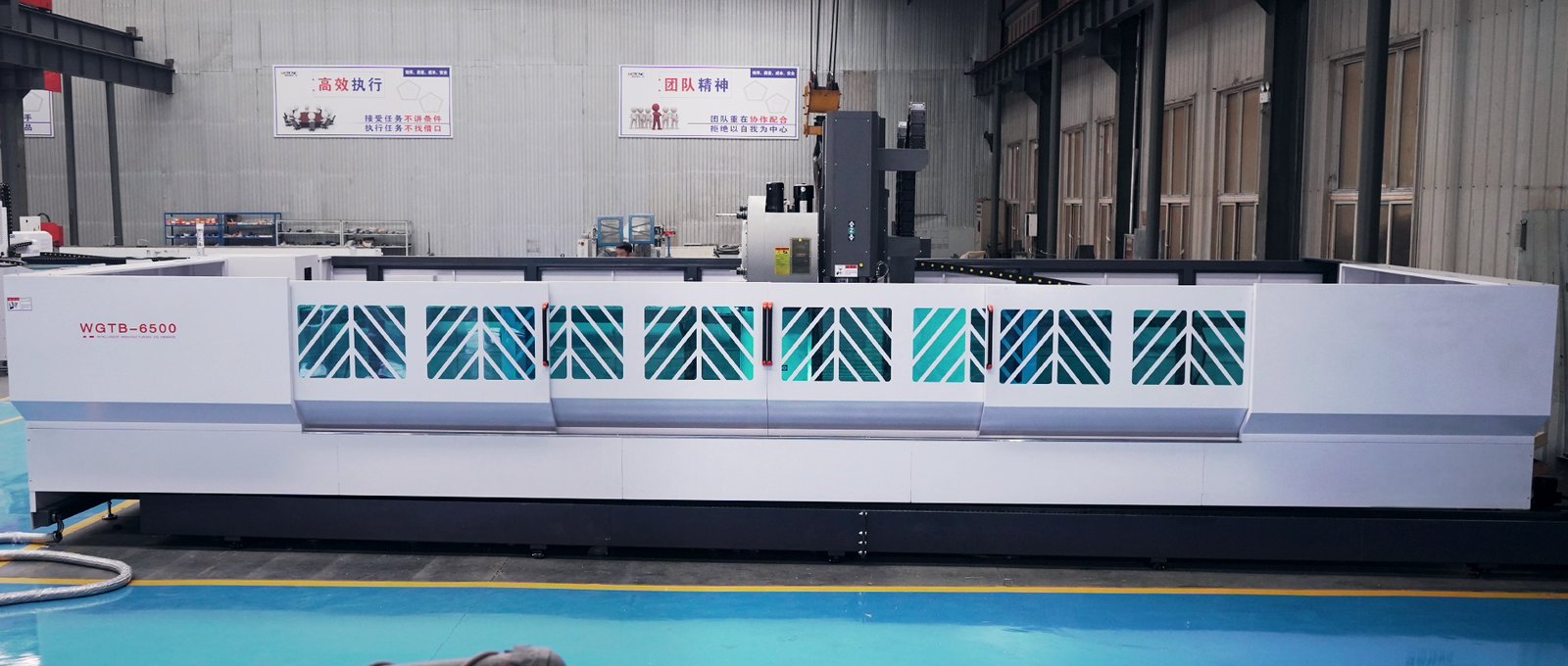
Elevator guide rails (T5, T8, T82, T127 and similar sections) are the classic long-heavy-alignment workpiece in profile machining: a 5-metre T8 rail weighs over ten kilograms per metre, rails join through splice plates and bolts, and any hole-position deviation on one rail becomes misalignment and rework at the installation site. Rail producers are never asking whether holes can be drilled — they are asking whether the distance from hole to rail end stays identical across thousands of rails.
1. Datum: everything starts from the rail end
Hole positions on guide rails are almost always dimensioned from the rail end, because rails themselves are joined end-to-end during installation. That makes cut length the coordinate origin of every hole — the same logic as solar frame profiles: cut-length accuracy decides everything.
- Confirm the length tolerance your sawing station can hold first, then unify the drilling/milling datum to the same end face
- Dimension hole patterns in standard modules (e.g. 200 mm steps) so programs can be parameterised: change the module count to generate a new pattern
- If end faces need milling (deburring, locating spigots), do it in the same setup as drilling — never in a second clamping
2. Support and anti-deflection: the core craft for heavy long rails
- Size the table load from the longest rail × weight per metre × safety factor, not from brochure headline numbers
- Distribute supports evenly along the rail; unsupported spans sink under cutting force and hole pitch drifts with them
- Clamping with the T-face up needs purpose-made pressure feet so the running surface is not marked (surface finish directly affects shoe life)
- Set clamping pressure separately for thin-wall rails (T5) and heavy sections (T127) — one pressure set bends thin rails and fails to hold thick ones
3. Joint alignment: where pitch consistency is truly tested
When two rails are joined, the splice holes must line up across the joint. This is not a single-rail accuracy problem but an every-rail problem: hole-to-end distance must be identical on each piece. CNC has a natural advantage here — hole positions are guaranteed by the program, independent of operator marking skill. Only two things need managing: stable cut lengths, and cleaning the locating faces every shift.
4. Machine selection: decide by weight and section, not by length
Stroke can be extended to order, so the deciding factors are rail weight and machining content.
- Light rails (T5/T8) with drilling and tapping only → the WGTA-4500 (BT30, 12000 rpm, 45 N·m) is sufficient
- Heavy rails (T82/T127) needing T-face milling or large counterbores → the WGTB-6500 (BT40, 52.5 N·m, 5000 kg table load)
- For factories running both lines, select for the heavier one and run light rails at reduced parameters
Typical guide rail operations and machine mapping
| Operation | Difficulty | Machine mapping |
|---|---|---|
| Splice hole drilling (aligned across joints) | Hole-to-end distance identical on every rail | Unified end datum + parameterised hole pitch |
| Counterbores / spot facing | Large diameter, needs low-speed torque | WGTA-4500 BT30 or WGTB-6500 BT40 |
| End-face milling, locating spigot | Deburr while holding squareness | Done in the same setup — no re-datuming |
| Local T-face milling (heavy rails) | High material removal, rigidity critical | WGTB-6500 · BT40 · 7.5 kW |
| Tapping | Low-speed high-torque; lack of torque breaks taps | BT40 rated 52.5 N·m — no speed-up gearbox needed |
Frequently asked questions
- Do rails longer than 5 m have to be machined in segments?
- No — stroke can be extended to order. Completing drilling, counterboring and end-face milling of a whole rail in one setup turns joint alignment into a pure datum-consistency question. Where segmentation is unavoidable, use one program datum with re-positionable stops so the relationship between segments is repeatable.
- The running surface of the rail gets marked by clamping. What should we do?
- Marks on the running surface usually come from pressure feet that are too narrow or clamping force that is too high. Widen the foot contact area, add a soft insert between foot and rail, and set clamping pressure separately by wall thickness — thin and heavy rails should not share one pressure setting.
- Our hole pitch follows a 200 mm module. Does every rail type need a new program?
- No. With a parameterised template you change arguments only (module count, hole diameter, rail length) and the shop floor calls the template. This is exactly the capability to check when evaluating equipment: whether the control supports parameterised programs and a section-template library.
- We already have a punch line. Is switching to CNC drilling and milling worth it?
- It depends on hole types and order structure. For plain round holes, one specification, very high volume, punching still wins on cost. Once counterbores, face milling, end machining, or multi-spec small-batch orders enter the picture, one machining centre replaces punching + drilling + milling stations and eliminates datum-transfer error between processes.
Send us your rail specification (section, weight per metre, length range, hole drawing) and we will return a machine recommendation, a fixture-zoning plan and a per-rail cycle estimate — so you can judge the investment before you see a quotation.