Process
Technical Insights
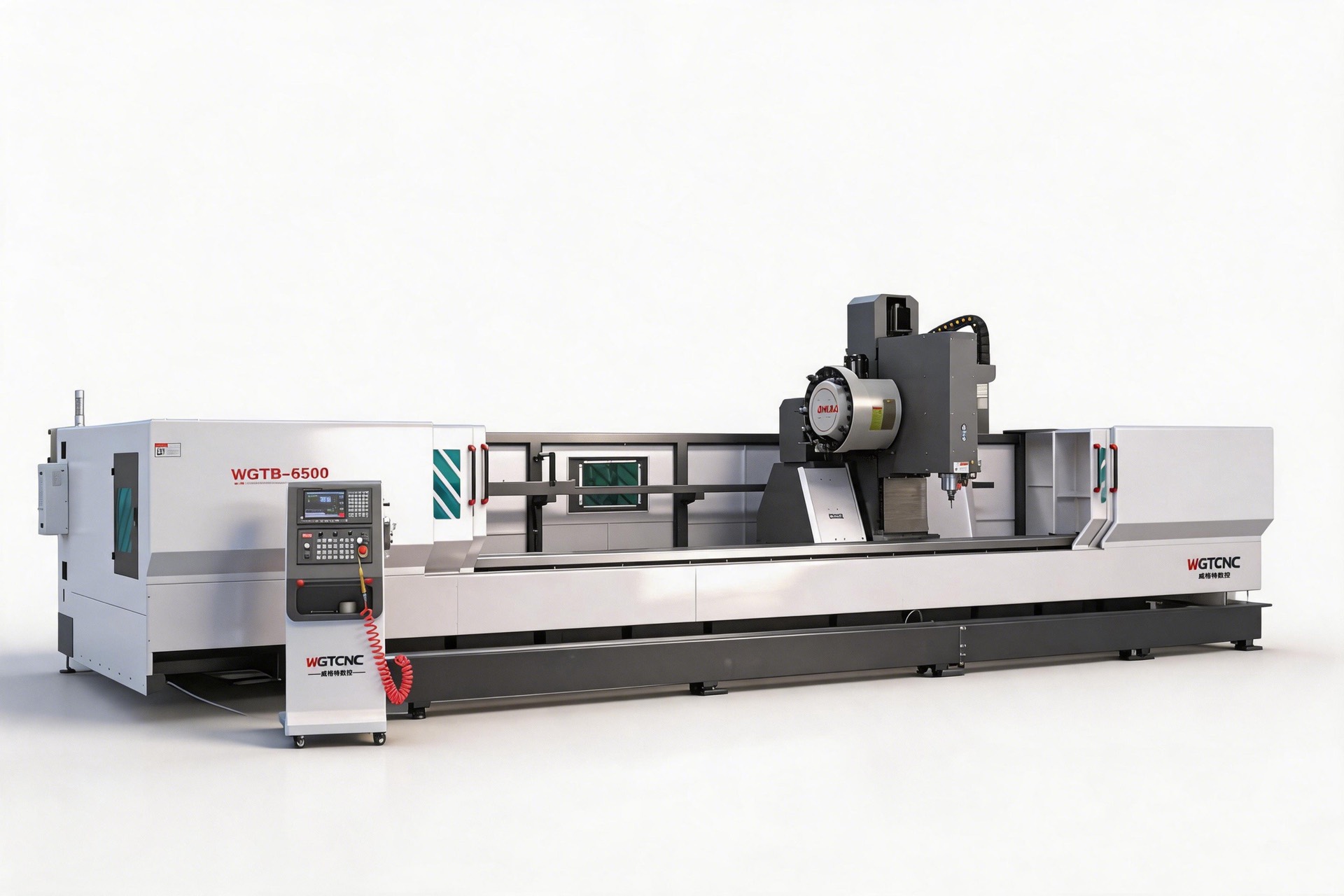
Window and curtain wall fabrication is a low-volume, high-variety business: a single project can contain forty profile variants, each needed in batches of twenty to two hundred pieces. Under those conditions the machine is judged on two things — whether the first part is right, and how fast the next variant can start. Spindle power rarely enters the conversation.
1. Where the datum comes from decides everything downstream
Most window profile holes are dimensioned from the sawn end, because that is how the assembly jig is set. If the saw leaves a 0.3 mm squareness error, every hole referenced from that end inherits it, and the error grows with distance. Two disciplines fix most of it: reference from a machined face or the profile's own locating web rather than from the raw extrusion skin, and check the first part against the drawing before running the batch, not after.
- Ask the saw to hold squareness, and measure it — a machining centre cannot correct a bad end face
- Reference the stop against the profile web, not the anodised skin
- Verify the first part with a square and a caliper at both ends of the batch run
- Log which fixture offset was used per profile code; the next variant will need it
2. Group holes by tool, not by position
A typical window profile carries three families of holes: hardware holes (round, often with a counterbore or a milling pocket for the handle), drainage and ventilation slots (elongated or stepped), and corner or location holes for the assembly cleats. Each family wants a different tool and a different feed. Programming them in drawing order forces constant tool changes; grouping by tool can cut the tool change count by half or more.
Hole families and process requirements
| Hole family | Typical form | Process requirement |
|---|---|---|
| Hardware holes | Ø4–Ø12 through holes, counterbores | Position accuracy and repeatability; counterbore depth control |
| Drainage and ventilation slots | Elongated slots, stepped pockets | Rigid small-diameter end mill, chip clearance, no burr in the drainage path |
| Corner and cleat holes | Ø5–Ø8, sometimes paired | Symmetry between left and right profiles; check with a jig |
| Marking and engraving | Shallow, for part identification | Fast spindle, low load — can share a cycle with drilling |
3. Changeover: the number that decides the investment
If a shop runs six changeovers a day and each takes forty minutes, that is four hours of spindle time lost daily. Getting changeover under ten minutes changes the economics of small batches far more than a faster spindle does. The levers are mechanical and organisational, not electrical.
- Quick-release fixture jaws with a repeatable pin location, so the same jaw setting returns to the same place
- Fixture offsets stored per profile code and recalled with the program — one button, not a re-datum
- Bar-code or QR scan on the work order that loads the program and the fixture offset together
- Standardise the clamp positions across a profile family so operators do not relearn the setup each time
4. Holding consistency from the first part to the five-hundredth
Small batches hide drift: each batch looks acceptable on its own, but the assembly line notices when profiles from different batches no longer fit. Three controls keep it in check — repeat positioning accuracy of the machine, fixture wear at the locating pins, and thermal drift if the machine runs all day in an uncontrolled workshop. A first-article check plus a mid-batch check at every changeover is usually enough; full SPC is rarely justified at these batch sizes.
5. Two strokes cover most curtain wall work
Profile lengths decide the model more than anything else. Standard window profiles sit between 3 and 4.5 metres; curtain wall and structural glazing mullions run longer and need the 6.5-metre table.
Configuration guide for window and curtain wall profiles
| Job | Suggested model | Why |
|---|---|---|
| Window and door profiles up to 4.5 m, many variants | WGTA-4500 | 4,500 mm X travel, 16-station carousel with 2 s change, ±0.01 mm repeatability |
| Curtain wall mullions and transoms up to 6.5 m | WGTB-6500 | 6,500 mm travel, 650 mm Y, 7.5 kW spindle, 1.8 s synchronous tool change |
| Deep sections needing multi-face work | WGT-3000G | Tilting table from −90° to +90°, both faces in one setup |
6. What to send with the enquiry
- Profile length distribution and the annual quantity per variant
- Number of variants per project and the average batch size
- Hole table per variant, or a drawing with the hole pattern dimensioned
- Whether holes are referenced from the sawn end or a machined face
- Assembly tolerance the line actually enforces — not the catalogue tolerance
Frequently asked questions
- Can the machining centre correct an inaccurate saw cut?
- Only partly. If holes are referenced from the sawn end, any squareness error is transferred directly. The practical fix is to hold saw squareness within a defined limit and to reference the stop against a stable web or machined face, then verify with a first-article check.
- How much does quick-change fixturing actually save?
- In a shop with several changeovers per day, going from forty minutes to ten typically recovers three or more hours of spindle time daily, which is usually worth more than the next model up in spindle power.
- Is 4.5 m enough, or do I need 6.5 m?
- Measure your longest profile including the clamping allowance. Standard windows usually fit 4.5 m; curtain wall mullions and structural glazing often need 6.5 m. Stroke can also be extended per order on all models, so a mixed range is worth discussing with the hole pattern in hand.
- Do I need a tilting table for window profiles?
- Only if holes or slots appear on more than one face. Many window profiles are machined from one side; curtain wall brackets and drainage details more often need two faces, where a tilting table removes a whole re-datum.
Send a hole table for your most-run profile and your variant list; we will return a changeover plan and a cycle estimate for the two or three models that actually fit, rather than a full catalogue.